
Reading List: QUEER
Nice and eclectic to provoke your thoughts.

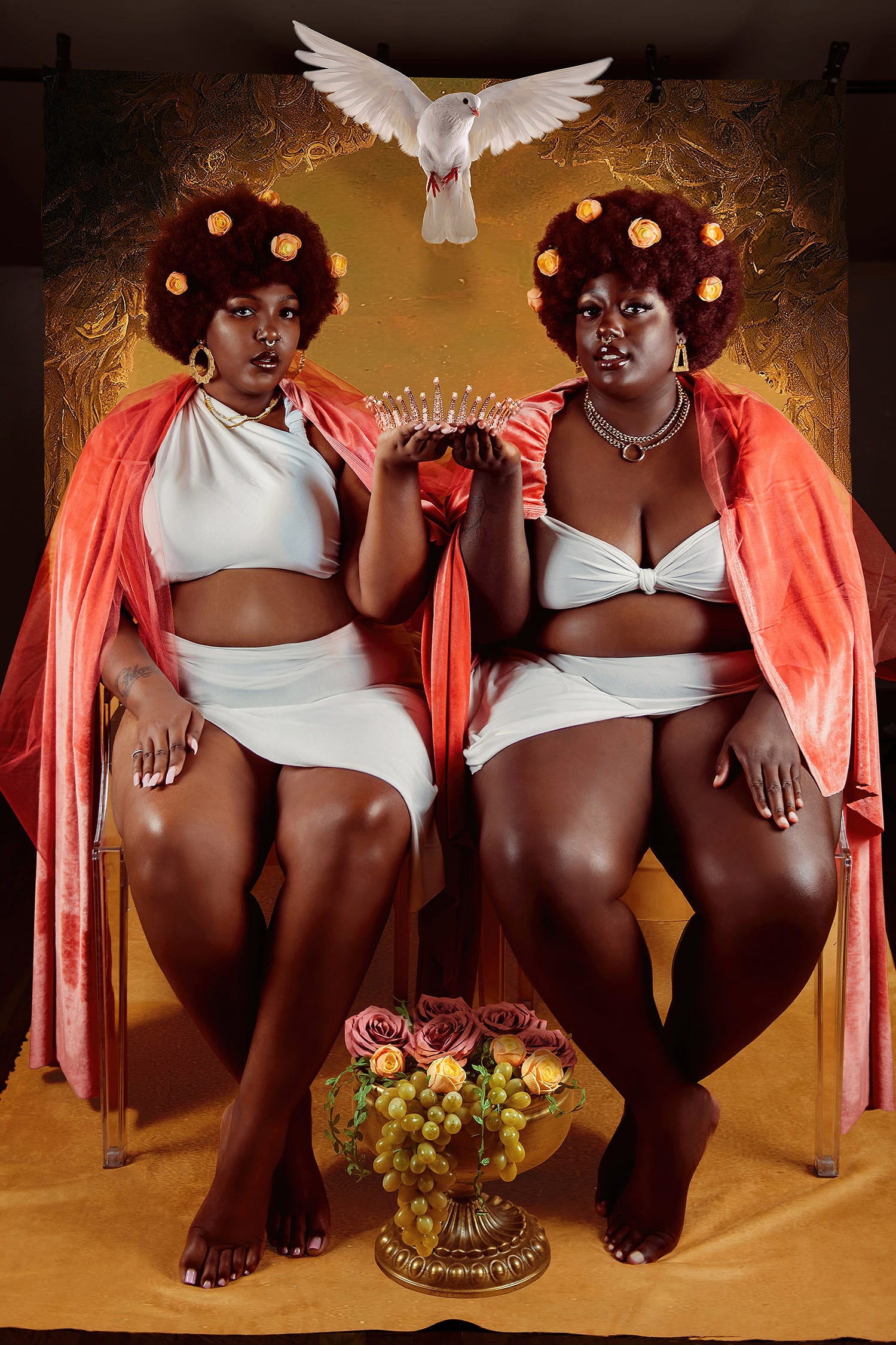
Photo by Sarah Huny Young (she/her)
Hello everyone,
Looking forward to thinking through Queer together on May 31. Here’s the reading list Jay Mimes and I have put together for you. Hope you enjoy.
See you soon,
Ece
1. The History of Sexuality, Michel Foucault (1976)
“Everything in the world is about sex, except sex. Sex is about power.” Attributed to Oscar Wilde
Why do we have a taxonomy of people around their sexual attractions and desires in the first place, gay, lesbian, heterosexual? Why has sexuality become such an important evaluative standard through which we classify people? Why do we confess our desires to friends, families, therapists, and institutions, as though this disclosure is what makes us free or authentic?
For Michel Foucault, this classification and confession around sexuality is precisely where power operates. Foucault’s argument is that the relationship between power and sexuality is misunderstood when sexuality is seen as a natural and unruly force that power simply represses or constrains. Rather, power operates by making us talk about sexuality and by making us inhabit categories around sexuality: homosexual, heterosexual.
Categories such as “gay,” “lesbian,” and “heterosexual” are not natural identities waiting to be unearthed. They are historically produced categories that emerged through modern institutions, scientific discourse, medicine, psychiatry, and Victorian morality in the 19th century. Before the 19th century, sex was treated more as an act. Sodomy, for example, was punished, but it was understood as something a person did rather than what a person fundamentally was. With the emergence of the modern state and disciplinary forms of power, “the homosexual” emerged as a type of person: someone with a psychology, identity, and inner essence, defined in opposition to “the heterosexual.” These classifications were never simply descriptive. They were prescriptive. They established norms and standards by defining what counted as healthy, civilized, moral, and reproductive against what was seen as deviant or pathological.
Foucault argues that prudish Victorian society did not silence sex. On the contrary, it talked about sex constantly. It produced endless language around sexuality: the hysterical woman, the masturbating child, the pervert. Doctors, therapists, priests, teachers, census officials, and state institutions constructed these categories in order to observe, regulate, and manage bodies and populations. Plus, through confession -first in Christianity and later in medicine, psychoanalysis, and therapy- individuals were encouraged to reveal the “truth” about themselves and their desires to priests, doctors, therapists, and eventually society itself. This structure survives today in the idea that one’s deepest truth lies in one’s sexuality, and that publicly speaking it is what produces authenticity and freedom.
For Foucault, this is how modern power operates most effectively: not by forbidding sex, but by making us monitor ourselves, examine ourselves, classify ourselves, and speak ourselves through the language of sexuality. The modern subject comes to understand herself through her sexual desires, and in doing so, participates in the very framework through which she is governed.
2. The History of the Term “Queer”
Again in The History of Sexuality, Foucault writes: "Where there is power, there is resistance." Resistance is not external to power but arises from within it. Just as the regulation of our bodies and the prescription of dominant Victorian norms through classifications of sexual deviance and normalcy were an exercise of power, the reappropriation of "queer" as a prideful term was its resistance.
3. Cruising Utopia, José Esteban Muñoz (2009)
In Cruising Utopia, José Muñoz writes: “Queerness is essentially about the rejection of a here and now and an insistence on potentiality or concrete possibility for another world.” For Muñoz, queerness is a horizon, a future that is not yet here. It is therefore not an identity but a practice. It is a doing, not a being, a reaching forward, and not an arrival.
Muñoz’s deepest quarrel is with what he calls “gay pragmatism,” the strategy that prioritizes measurable policy outcomes to secure immediate protections for the LGBTQ+ community within the capitalist heteronormative framework, such as marriage equality, healthcare benefits, and legal representation, which surrender to the present, settling for what is rather than imagining what could be. To accept the here and now is, for Muñoz, a kind of foreclosure, “a prison house.” Gay pragmatism, in making peace with the present, abandons the more radical promise that queerness holds: the concrete potentiality of another world.
For Muñoz, queer aesthetics contain blueprints of a queer futurity. Frank O’Hara’s poems, for instance, with their “contagious happiness within the quotidian,” have a utopian quality for him, imagining another collective belonging and mapping a future where readers will not be beset with feelings of nervousness and fear.
An Alternative Imaginary for Collective Belonging: Queering the Map Project
“Through mapping LGBTQ2IA+ experience in its intersectional permutations, the project works to generate affinities across difference and beyond borders — revealing the ways in which we are intimately connected.”
4. Intersectionality of Queer Futurity
The problem with Gay Pragmatism is not that it sets strategically achievable goals within the present context, but that it fails to recognize how overlapping social identities - race, gender, class, and sexuality - intersect to create unique systems of discrimination and privilege. By operating within existing structures, gay pragmatism remains compatible with, and even reinforces, other systems of oppression based on class, race, gender, and sexuality.
The 19th century, Victorian, normal versus deviant distinction is back. This time within the LGBTQ+ community itself. Read here: “Queer” as in… what, exactly?
Why Are Gay Spaces So Racist? by bittnia and Ava Emilione
Pinkwashing Trans Edition by Shonalika
If you like this post, also check out 5 Feminist Ideas That Changed the World